


The Gray Hair Transition Guide
Thinking about growing out your gray?
Our Lancaster stylist shares exactly what to expect, how to survive the awkward phase, and when to ask for help.
By Lisa @ Salon Enso
Growing out your gray? Here's everything you need to know.
Maybe it started with a conversation at the salon. Or a moment in the mirror when you thought, what if I just… let it be? Whatever sparked it, if you're thinking about growing out your gray, you're in good company. And you're asking the right questions.
The gray hair movement isn't a trend. It's a shift. More and more people are choosing to embrace their natural color. That doesn't mean the process is always easy. At Salon Enso, we have these conversations at the chair every week. So we wanted to put everything in one place: what to expect, how to get through the hard parts, and how we can help you do it on your terms.
First: Why is everyone talking about gray hair right now?
For a long time, gray hair was something to cover, quickly, consistently, and without question. But something has shifted. Celebrities like Jamie Lee Curtis, Andie MacDowell, and Sarah Jessica Parker have stepped onto the red carpet proudly silver. Communities like #SilverSisters and #Grombre have grown into global movements of women supporting each other through the transition. In salons across the country, including right here in Lancaster, the question has changed from "can you cover this?" to "can you help me grow it out?" People aren't just tolerating their gray, they're seeking it out. And there's a reason: when done thoughtfully, a gray transition can be one of the most freeing, low-maintenance decisions you make for your hair.
"You're not letting yourself go — you're just letting go of the idea of being silver."
Lorraine Massey, stylist & author
How Long Does It Actually Take?
This is the first question almost everyone asks, and the honest answer is: it depends.
Hair grows about half an inch per month. If your hair is shoulder length, you're looking at roughly 12–18 months to fully grow out the previously colored sections cold turkey. A pixie or short cut can get you there in 6–9 months. Longer hair means more patience.
The good news? You don't have to do it cold turkey. Most of our clients choose a middle path, and we'll explain what that looks like below.
The Awkward Stage Is Real. Here's How to Get Through It.
We're not going to sugarcoat it: months two through five are usually the hardest. You'll see a visible line where your natural gray meets your previously colored hair, sometimes called the line of demarcation, or less kindly, the "skunk stripe." It can feel jarring, especially if you've been coloring your hair for years.
A few things that can help in the meantime:
- Root touch-up sprays or powders (like L'Oréal Magic Root Cover Up) can soften the contrast temporarily between appointments.
- Textured styles, waves, and layers naturally blur the line and make regrowth less stark. Blunt cuts make it more visible, so it's worth discussing with your stylist at your next cut.
- Accessories and styling tricks like a changed part, a half-up style, or a silk headband can go a long way during the grow-out phase.
- Come in and talk to us. Seriously, this is where having a stylist in your corner matters most.
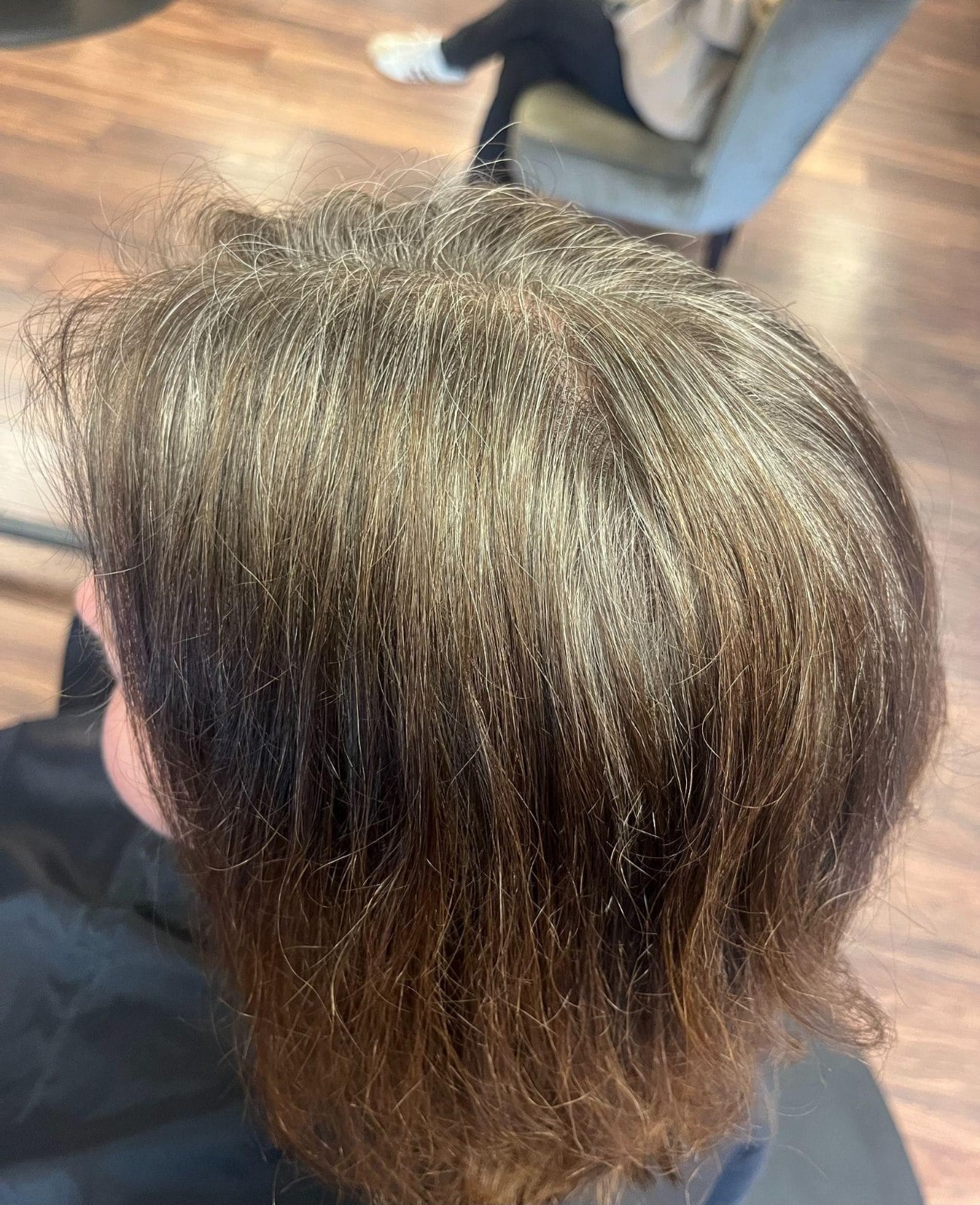
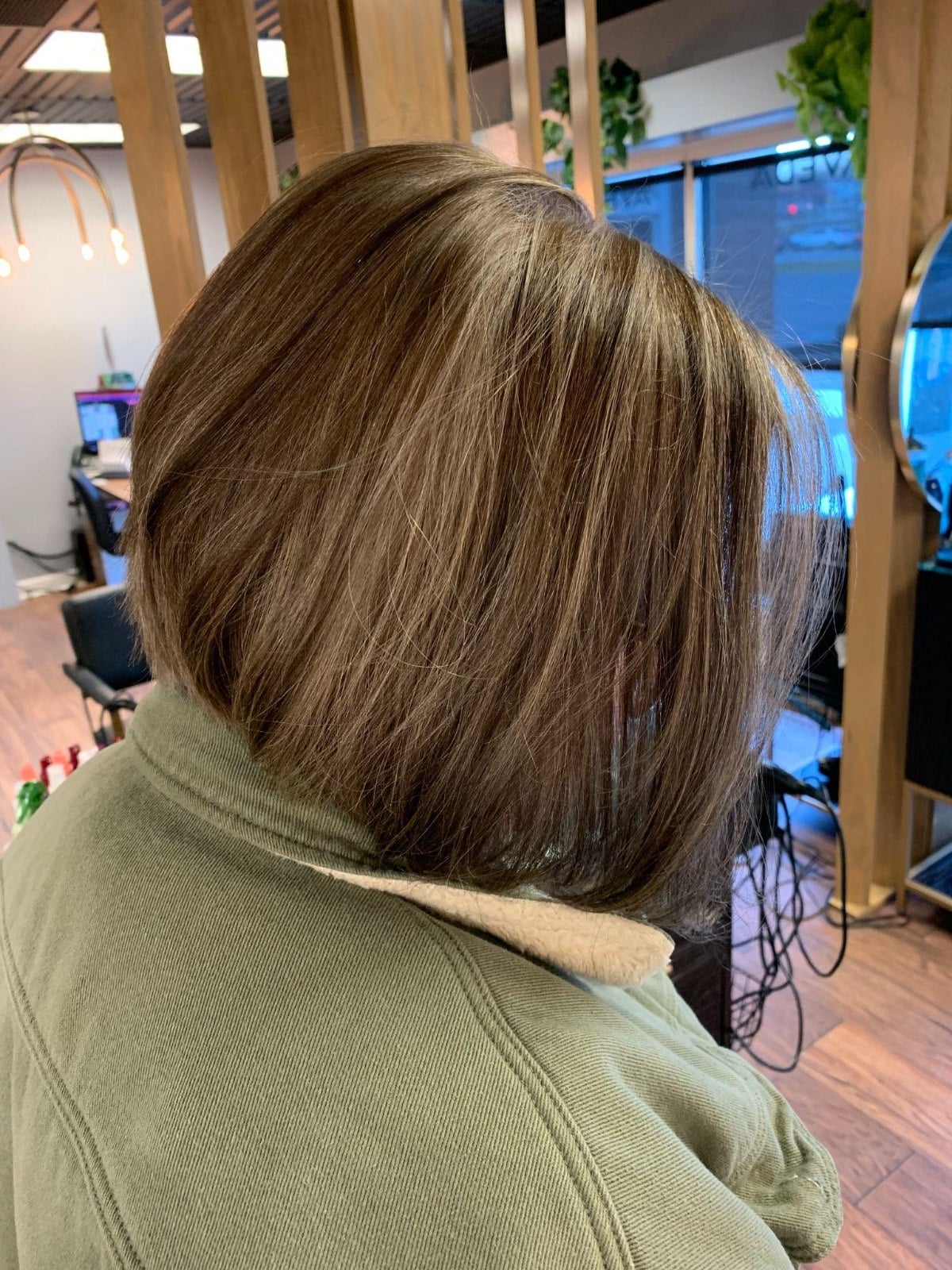
Before & After by Shiana @ Salon Enso
Your Three Paths Forward
There is no single right way to grow out gray. Here are the three most common approaches we see, and what each one involves:
1. Cold Turkey
Stop coloring it and let it grow. This is the most straightforward approach, and the most challenging emotionally. The contrast between your natural gray and the existing color can feel dramatic for months. That said, many clients find this approach liberating once they commit. It's also the most budget-friendly route: once you stop coloring, you're no longer spending on appointments to cover roots every three to four weeks, and that adds up faster than most people realize. It works especially well for people who have shorter hair or a high percentage of gray (50% or more).
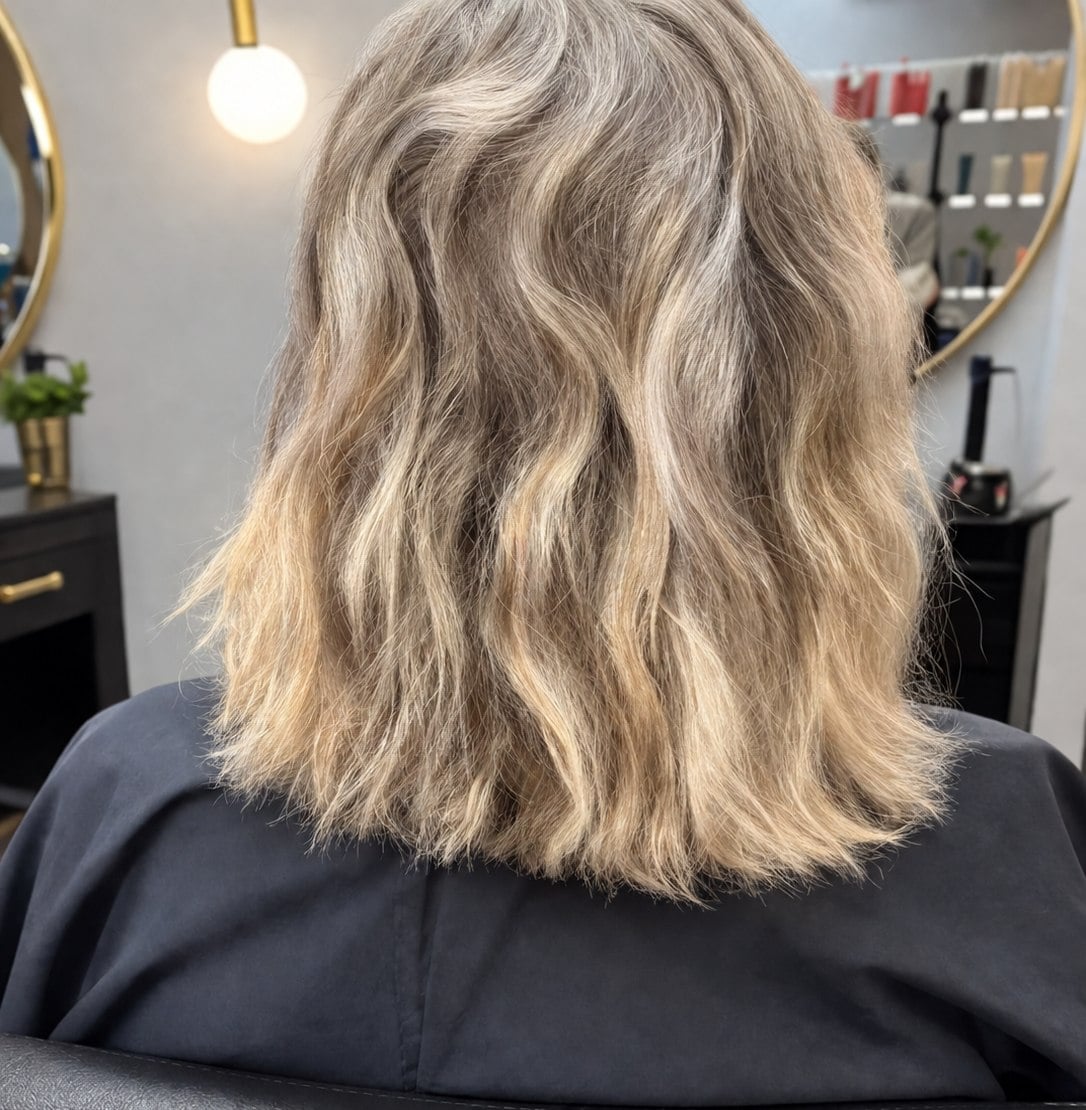
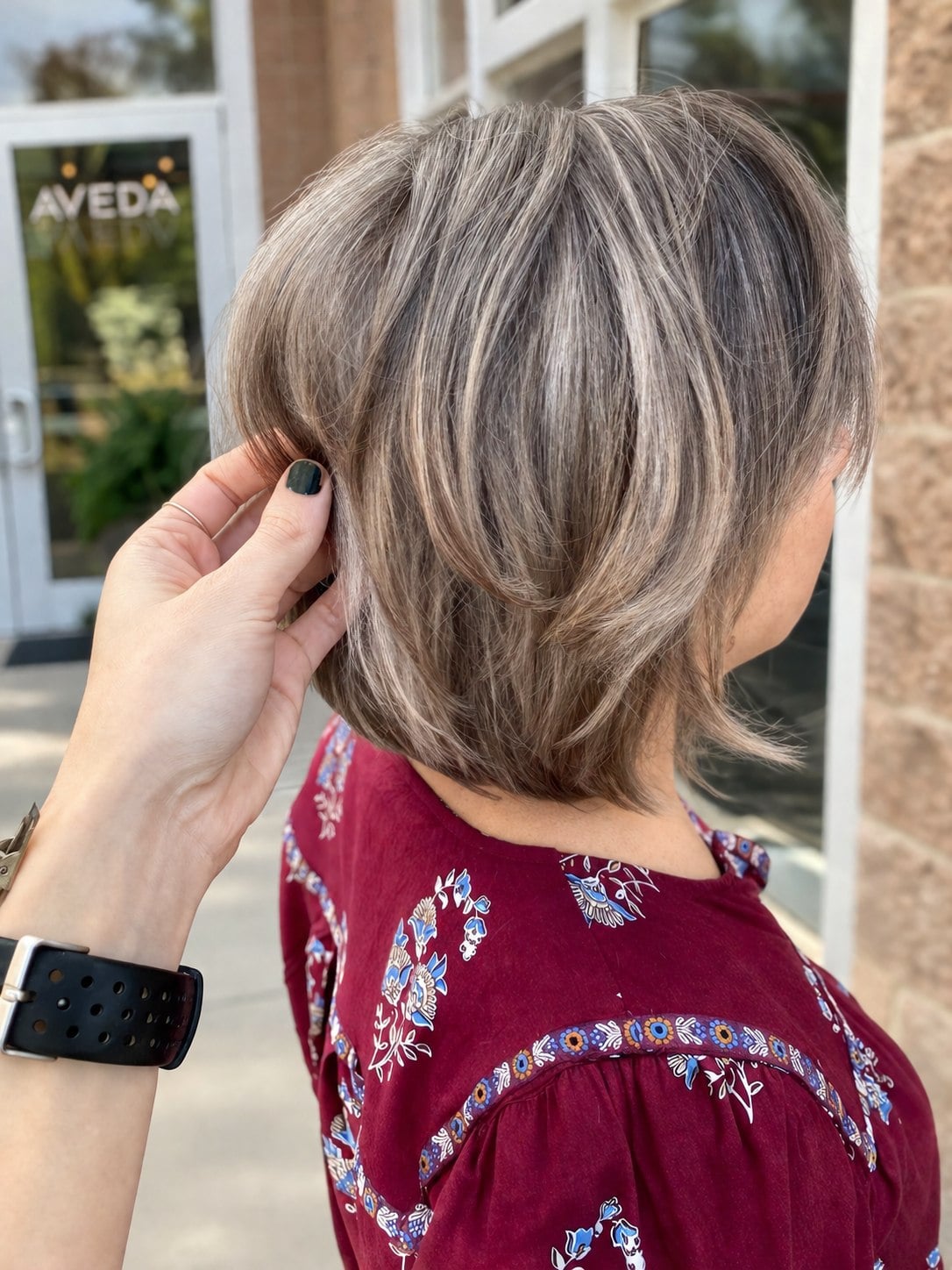
Before & After by Sid @ Salon Enso
2. Gray Blending (Our Most-Requested Option Right Now)
Gray blending uses highlights, lowlights, balayage, and/or toning techniques to soften the line between your natural gray and your existing color, so the transition looks intentional rather than accidental. You're not covering your gray; you're working with it.
This approach is lower maintenance than full-coverage color, can stretch the time between appointments, and is a beautiful option for people who want to ease into their gray rather than make an overnight leap. It's the service we're seeing the most demand for right now, and one we love doing. One thing worth knowing: the investment for gray blending varies for every person. Your hair's length, density, and the specific processes needed to achieve the right blend all play a role in what your service will look like and what it will cost. That's exactly why we recommend starting with an in-person consultation. It gives us a chance to look at your hair up close, understand where you're starting from, and map out a plan that's tailored to you. No guesswork, no surprises.
3. The Big Chop
The fastest path. Cutting your hair short (a pixie, a textured bob, or even a buzz) removes most of the previously colored length quickly. It's a bold move, and not for everyone, but clients who go this route often describe it as the most freeing decision they've made for their hair. If you've been curious about a short cut anyway, this might be the moment.
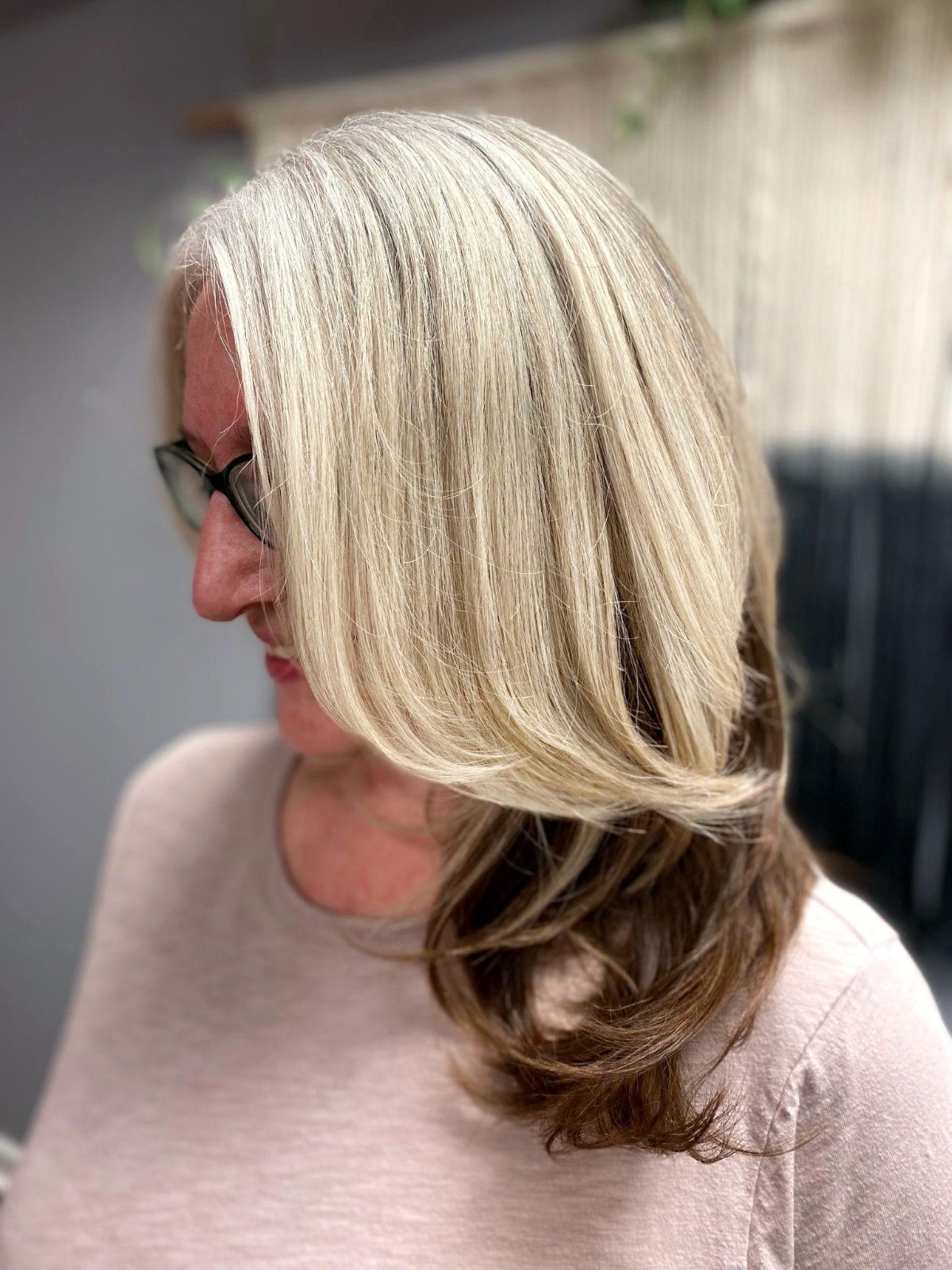
Gray Blending by Darcy @ Salon Enso
What Happens to Your Hair's Texture and Color?
Here's something we want you to know before you start: your natural gray may not look or feel exactly how you imagined. As melanin production decreases, gray hair can become drier, more porous, and sometimes coarser or wavier than your previously colored hair. It may also be prone to yellowing or brassiness over time, especially with hard water or sun exposure.
This isn't a reason not to go gray. It just means your routine will shift a little:
- Purple or blue toning shampoo neutralizes brassiness and keeps gray looking cool and clean. (Botanical Repair Purple Shampoo is our favorite.)
- Weekly deep conditioning keeps gray hair hydrated and soft, since it needs more moisture than pigmented hair. At-home masks and conditioners are a great foundation, but they work on the surface of the hair. Professional treatments go deeper.
At Salon Enso, we offer Aveda's professional treatment services that are a step above anything you can replicate at home. Two we reach for most often with gray hair clients:
Nutriplenish™ Professional Treatment: powered by pomegranate seed oil, coconut oil, and mango butter, this deeply moisturizing treatment infuses the hair with 5x hydration and up to 2x shine in a single visit. It's customizable by hair type, so whether your gray is fine and silky or thick and coarse, your stylist tailors it to what your hair actually needs. Think of it as a reset button for dry, dull or porous strands.
Botanical Repair™ Professional Treatment: a bond-building treatment that works from the inside out to strengthen hair, repair damage, and restore shine. If your hair has been chemically colored for years, this is the treatment that helps it recover and rebuild as it transitions. It's also available as an add-on to any color service.
The difference between at-home and in-salon care isn't just about the products. It's about the application, the timing, and having a trained eye assess what your hair needs in the moment. Your stylist can pair a professional treatment with your existing service so it becomes a seamless part of your visit, not an extra errand. We also love sending you home with the right Aveda products to maintain that result between appointments, because the best results happen when in-salon and at-home care work together.
- Gloss treatments are one of the most underrated tools in a gray hair routine, and one of our favorites to recommend. Here's why.
When you were coloring regularly, every appointment was essentially also a conditioning and shine treatment. Color coats the hair shaft and gives it that polished, reflective look. Once you stop coloring, that built-in shine disappears, and gray hair, being naturally more porous, can look dull or flat without a little help.
This is where Aveda's Full Spectrum Demi-Permanent™ Hair Color comes in, and it's not just a gloss. It's a professional-grade, deposit-only color treatment that works beautifully on gray hair in a few different ways:
- Tone management. Gray hair can shift warm or brassy over time, especially with hard water and sun exposure. Full Spectrum Demi can be used to neutralize unwanted yellow or gold tones and keep your silver looking cool, bright, and intentional, not washed out.
- Shine and conditioning in one. Formulated with certified organic moringa, tamanu, and kukui oils, it leaves hair up to 3x smoother and 5x shinier. Because it's deposit-only, it conditions the hair while it works rather than lifting or altering it.
- 96% naturally derived. For clients who are choosing gray in part to simplify their routine or reduce chemical exposure, this matters. Aveda's Full Spectrum Demi is vegan, cruelty-free, and formulated to the high botanical standards Aveda is known for.
A gloss treatment with Full Spectrum Demi can be added to almost any salon visit and takes as little as five to twenty minutes. It's one of those services that makes a quiet but noticeable difference, the kind where you leave the salon and people can't quite put their finger on why your hair looks so good.
Want to go deeper? We wrote a full blog dedicated to this treatment: Aveda's New Demi Hair Color for Radiant, Healthy Hair. It's a great read before your next appointment.
- Less heat when you can manage it. Gray hair tends to be vulnerable to damage, so a lower heat setting and a good heat protectant go a long way.
Will I Look Older? Let's Talk About It.
This is the fear underneath almost every gray hair conversation. And it's a fair one. Our culture has spent decades tying gray hair to aging in a way that's honestly never been applied equally to men.
Here's what we know from years of having this conversation at the chair: well-cared-for gray hair does not make you look old. Dull, dry, neglected hair does. The goal is to keep your gray vibrant and healthy, and that's entirely doable.
A few things that help gray hair look its most radiant:
- Makeup: Warm, peachy blush, defined brows, and a brighter or bolder lip can complement silver tones beautifully.
- Wardrobe: Gray hair pops against richer, more saturated colors. Reach for jewel tones, crisp whites, and warm neutrals, and step back from anything muddy or beige.
- A great haircut: This matters more than ever. Layers, texture, and shape are what make gray hair look intentional and modern.
Your Questions, Answered
Can I go gray if my hair is currently dyed dark?
Yes, but this is the highest-contrast transition and benefits the most from professional help. The jump from dark brown or black to natural gray is significant. A gray blending approach or a gradual lightening process with your stylist makes this much more manageable.
Will my gray grow in evenly?
Probably not, and that's okay. Most people's natural gray pattern is varied: lighter at the temples, darker in the back, more concentrated at the crown. This actually creates a beautiful dimension when it grows in. It's one of the things we love most about embracing natural gray.
What if I change my mind halfway through?
Then we go back. Seriously, there are no wrong decisions here. This is your hair, and our job as stylists is to support whatever feels right for you at any stage of the process.
How often will I need to come in?
During the transition, plan to check in with your stylist every 6 to 8 weeks, even if it's just for a toner refresh, a gloss, or a trim to keep your ends healthy. Once you're fully grown out, gray hair can often stretch to longer intervals between visits, which is one of the reasons so many people love it.
Ready to Start? We're Here for It.
At Salon Enso, we believe great hair starts with understanding why your hair does what it does, and that's especially true during a gray transition. Whether you're ready to commit fully, want to explore gray blending, or just want to sit down and talk it through, we're here.
Book a consultation with one of our Lancaster stylists and let's figure out the path that feels right for you, at your pace and on your terms.
Book Your Gray Transition ConsultationAlready on your gray journey? We'd love to hear where you are. Tag us on Instagram or Facebook. Nothing makes us happier than encouraging our guests along their silver journey.